 FREE Tracked 48 Delivery on orders over £25
 Upgrade to 24 Hour Tracked Delivery
Bee Hotel: How to Make a Natural Bee Hotel Using Garden Stems
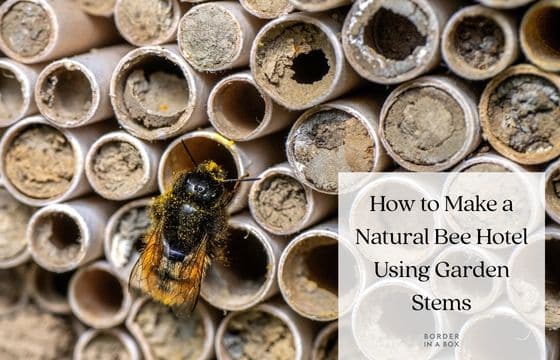
How to make a Bee Hotel using plants from your own garden (and why it matters more than ever)
With World Honey Bee Day on 15 August, I wanted to share something simple, joyful, and genuinely helpful you can do for the pollinators who keep our gardens alive. You don’t need fancy equipment, expensive kits, or a workshop full of tools — you can make a proper, functional solitary‑bee hotel using materials already in your garden.
Not a decorative Pinterest prop. Not one of those mass‑produced “bee houses” that look cute but don’t actually work. A real habitat that solitary bees will genuinely use.
And the best part? It’s incredibly easy.

Why Make a Bee Hotel?
Solitary bees — like mason bees and leafcutters — are gentle, hardworking pollinators. They don’t live in hives, they don’t make honey, and they don’t swarm. Instead, they nest in hollow stems, old wood, and tiny natural cavities.
By giving them a safe place to lay their eggs, you’re helping:
- increase pollination in your garden
- support local biodiversity
- give butterflies and other insects a healthier ecosystem
- create a little wildlife moment you can watch from your window
And honestly? There’s something magical about seeing a bee seal up a tunnel with a leaf, knowing you’ve helped create a home.
The Easiest Bee Hotel: A Stem Bundle
If you want a bee hotel that’s natural, beautiful, and genuinely effective, a stem bundle is perfect. It’s exactly what solitary bees choose in the wild — hollow stems with a closed end, placed horizontally.
What you can use from your garden
Look for any hollow or pithy stems, such as:
- raspberry canes
- blackberry canes
- teasel stalks
- sunflower stalks
- hydrangea stems
- bamboo (if you have old pieces lying around)
- cow parsley stalks
You only need a handful.

Photo above – cow parsley stalks, scissors, tape measure, twine – ready to make a natural bee hotel.
How to prepare them
- Cut stems into 15–20cm lengths.
- Make sure one end is naturally closed — bees prefer a back wall.
- Check the inside is smooth (no splinters or ragged fibres).
- Bundle them tightly with twine or garden string.
- Keep the stems horizontal, not vertical.
That’s it. You’ve just made a bee hotel.

Top tip: How to Make Sure Your Stems Have a Closed End
When you cut stems into 15–20cm lengths, you’ll often find that both ends are open — but solitary bees really prefer a closed back wall. Luckily, it’s very easy to fix this naturally. Many hollow stems (like raspberry, blackberry, teasel, sunflower and bamboo) have internal nodes, so if you cut just below a node, you automatically get one end sealed. For stems that are fully open, you can simply close the back using a tiny dab of mud, a folded leaf, or a small piece of twig gently tucked into the end.
Please don’t use
- glue
- tape
- varnish
- resin
- hot glue
- silicone
- anything synthetic
Where to Place Your Bee Hotel
Location matters more than the design. Here’s where solitary bees thrive:
- South or south‑east facing (morning sun is essential)
- 1–2 metres off the ground
- Sheltered from heavy rain and storms
- Near flowers (within 10 metres of herbs, wildflowers, lavender, cosmos, scabious, mint, oregano)
- Mounted securely — no wobbling or swinging
If you can add a little roof tile, even better.

What NOT to Use (Important!)
Avoid anything that looks decorative but doesn’t help bees:
- pinecones
- straw
- bark chips
- moss
- plastic tubes
- varnished or painted wood
- pressure‑treated timber
- shallow holes (less than 8cm)
- vertical tubes
These attract spiders, earwigs, mould, or simply don’t work.
Why This Works Better Than Most Shop‑Bought Bee Hotels
Many mass‑produced bee hotels are designed to look pretty rather than functional. They often have:
- tunnels that are too shallow
- splintered holes that damage wings
- softwoods that ooze resin
- decorative fillers that attract predators
- roofs that let in rain
- tubes that are too wide or too narrow
Your stem bundle avoids all of these problems. It’s natural, safe, and exactly what solitary bees choose in the garden. There’s something special about creating a habitat with your own hands. A tiny gift to the bees. A tiny moment of joy for you. And a healthier garden for everyone.
Grow Flowers to Support Your Bee Hotel
A bee hotel works best when it’s surrounded by the right flowers. If you’d like a ready‑made plan for a wildlife‑friendly border, my Butterflies & Bees Garden Design Kit is designed exactly for that — a colourful, pollinator‑rich garden that supports bees all season long. It’s the perfect companion to your homemade bee hotel and a beautiful way to help your garden buzz with life.
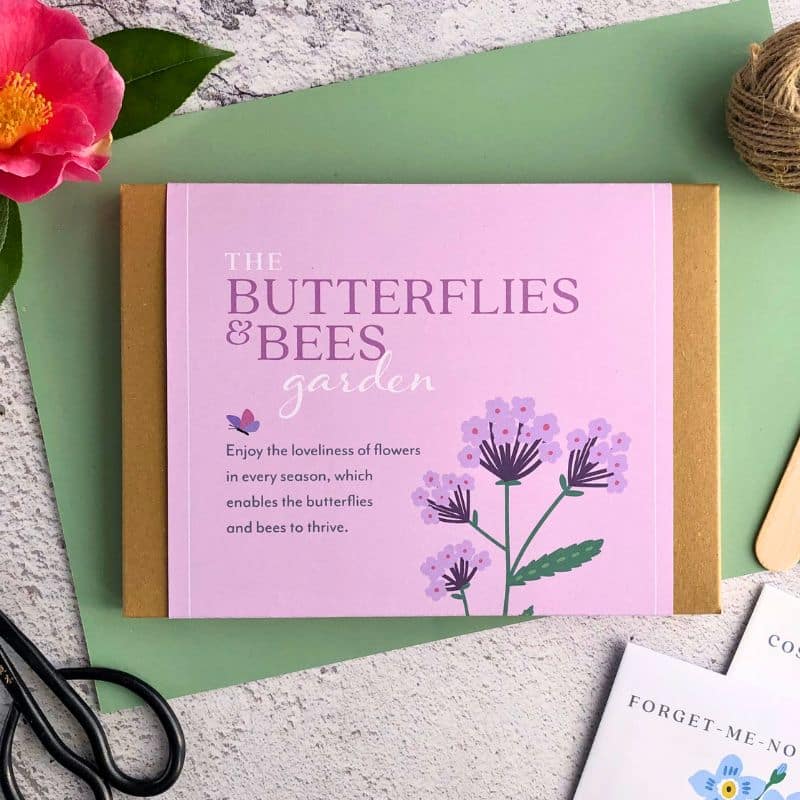
Click here to learn more about the Butterflies & Bees Garden Design Kit — the perfect companion to your bee hotel.
If you would like to donate to the Bumble Bee Conservation Trust, you can find out more here – https://www.bumblebeeconservation.org/